The Case for a New Foundation
K–12 is colliding with a once‑in‑a‑century shift. Point solutions and isolated “AI tools” can’t resolve chronic problems—staffing shortages, enrollment erosion, disengagement, and the limits of factory‑era schedules. The Learning Counsel frames the needed leap as Omni‑AI: a converged, enterprise layer that coordinates data, time, curriculum, and human work between systems—AI‑as‑Infrastructure, not just AI as a toolbox. In this model, districts build a governable Omni‑AI Core that knows, recommends, and acts across LMS, SIS, content, and operations while keeping humans in the loop and aligned to guardrails like NIST’s AI Risk Management Framework and FERPA/COPPA. [thelearnin...ounsel.com]
This enterprise lens pairs with a reframing of learning itself. The Alliance’s agenda calls for moving beyond AI literacy toward AI fluency, standing up missing K‑12 AI standards, and redesigning school logistics around Time AI—auto‑cohorting and dynamic calendaring that synchronize live teaching with learner readiness. [thelearnin...ounsel.com], [thelearnin...ounsel.com], [thelearnin...ounsel.com]
At the same time, the Learning Counsel’s research advances a human‑centered thesis: to thrive alongside intelligent machines, schools must explicitly elevate the five uniquely human characteristics and all nine domains of human intelligence—not just the two we traditionally test (linguistic and mathematical‑logical). [thelearnin...ounsel.com], [thelearnin...ounsel.com]
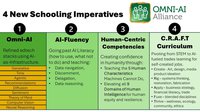
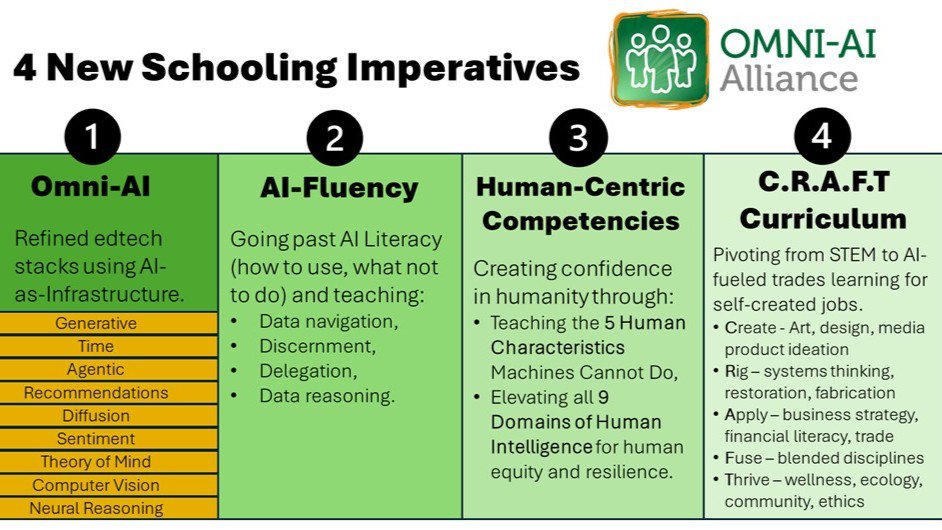
The result is a coherent set of four pillars—a strategy stack schools can begin building now.
Pillar 1 — Omni‑AI: From Tools to AI‑as‑Infrastructure
What it is. Omni‑AI is the convergence of many AI types—generative, agentic, recommendation, time‑based, vision, and more—woven into a closed‑loop, interstitial “Core” that orchestrates schedules, cohorts, resources, and data flows across your existing platforms. Think of it as the district’s cognitive “mesh” that sits between systems, not inside a single app. [thelearnin...ounsel.com]
Why it matters. Fragmented point solutions force endless integrations, retraining, and manual work; an Omni‑AI architecture simplifies operations and unlocks personalization at scale. The Learning Counsel describes the shift as inevitable: as edtech infuses with multiple AI types, districts will need a unifying Core to coordinate the enterprise—what some authors dub a “plasmic mind” that flexes to context while preserving human governance. [thelearnin...ounsel.com], [thelearnin...ounsel.com]
What leaders do first.
- Define the Core. Map how an Omni‑AI layer would route recommendations, cohort learners, trigger interventions, and manage privacy/risk (aligned to NIST AI RMF + FERPA/COPPA). [thelearnin...ounsel.com]
- Refine the stack. Plan a glidepath away from brittle point‑solution sprawl toward Core‑aware apps and agents; the Alliance provides working groups, draft standards, and vendor/leader co‑authoring venues. [thelearnin...ounsel.com], [thelearnin...ounsel.com]
Pillar 2 — AI Fluency (Beyond Literacy)
What it is. AI literacy teaches “how to use” or “what not to do.” AI fluency is enterprise‑level competence: designing safe, human‑in‑the‑loop workflows across systems; understanding data rules, model behaviors, risk, and governance; and operationalizing Time AI so instruction meets students at readiness, not bell time. [thelearnin...ounsel.com]
Note that unlike typical calendars, Time AI fractionalizes class time and auto‑cohorts students into live moments the instant a set is cognitively ready, “floating” sessions until thresholds are met and placing meetings only on those learners’ calendars. Teachers deliver multiple shorter live touchpoints to aligned cohorts while students progress asynchronously between them—reducing load and increasing precision. [thelearnin...ounsel.com]
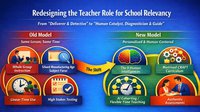
This breaks the by‑age, whole‑group pattern and replaces it with pace‑based orchestration, addressing real classroom variance and teacher overload. [thelearnin...ounsel.com], [thelearnin...ounsel.com]
Why it matters. AI fluency modernizes the work of school: safer adoption, fewer manual bottlenecks, and genuinely personal timing—an essential step toward Pathflex/AI Schooling models and new space use on campuses. [thelearnin...ounsel.com]
What leaders do first.
- Adopt an AI fluency rubric for staff (data navigation, discernment, delegation to agents, and data reasoning) paired with AI pilots. [thelearnin...ounsel.com], [thelearnin...ounsel.com]
- Run “stack sprints.” Cross‑functional teams storyboard an end‑to‑end learning flow (curriculum → readiness evidence → cohorting → live touchpoint → assessment) and implement it with your current tools. [thelearnin...ounsel.com]
Pillar 3 — Human‑Centric Competencies: What Machines Can’t Do
What it is. The Learning Counsel identifies five uniquely human characteristics—a practical answer to “What will remain ours?”:
- Creativity (true originality via free will),
- Conscientiousness (focused will/ethical withholding),
- Cognition (the human ability to know and reconstruct mental models),
- Curiosity (compulsion to identify and resolve the unknown), and
- (Further qualities are elaborated in the research as the mechanics that differentiate human minds from algorithmic processes.) [thelearnin...ounsel.com]
Paired with this are nine human intelligences (a revision of Gardner for the AI era), which Learning Counsel research urges schools to intentionally develop across the whole learner profile—not just linguistic and logical‑mathematical. [thelearnin...ounsel.com]
Why it matters. As Omni‑AI takes over routine cognition, schools must codify and teach the human edge—confidence in being human—while using AI to amplify rather than displace the teacher’s role. [thelearnin...ounsel.com], [thelearnin...ounsel.com]
What leaders do first.
- Embed the Five + Nine into curriculum maps, grading discourse, and advisory—explicitly naming, observing, and credentialing human competencies. [thelearnin...ounsel.com]
- Shift PD so teachers practice diagnosing and coaching the human characteristics—leveraging the Omni‑AI Core for logistics so they can invest in mentorship. [thelearnin...ounsel.com]
Pillar 4 — The CRAFT Curriculum: From STEM‑Only to AI‑Fueled Trades & Enterprise
What it is. CRAFT pivots from STEM‑as‑destination to human‑first, hands‑on learning that machines and off‑shore labor cannot easily replicate. The pillars:
- Create — art, design, media, product ideation;
- Rig — systems thinking through tools, fabrication, restoration;
- Apply — entrepreneurship, strategy, finance;
- Fuse — blended disciplines (culinary, construction, digital production);
- Thrive — wellness, ecology, ethics, community. [thelearnin...ounsel.com]
Why it matters. The Learning Counsel’s recent analyses argue that the “STEM shortage” narrative masked structural labor shifts; many grads face underemployment while youth and families pivot toward trades and entrepreneurship. CRAFT aligns schooling with these realities and with AI‑driven productivity, giving learners agency, employability, and local economic relevance. [thelearnin...ounsel.com], [thelearnin...ounsel.com]
What leaders do first.
- Stand up CRAFT pathways that culminate in real products, services, and micro‑enterprises, assessed against the Five + Nine human competencies. [thelearnin...ounsel.com], [thelearnin...ounsel.com]
- Fuse CRAFT with Time AI so students move at pace, cohort for build sprints, and meet mentors (in‑person or remote) precisely when ready. [thelearnin...ounsel.com]
How the Four Pillars Reinforce One Another
- Omni‑AI supplies the orchestration capacity (data + time + agents). [thelearnin...ounsel.com]
- AI Fluency equips staff to design safe, governable, cross‑system workflows—especially Time AI for readiness‑based live teaching. [thelearnin...ounsel.com], [thelearnin...ounsel.com]
- Human‑Centric Competencies ensure the enterprise optimizes for what only humans can do, with structures that value all nine intelligences. [thelearnin...ounsel.com], [thelearnin...ounsel.com]
- CRAFT operationalizes the human edge through tangible making, repair, venture‑building, and community contribution. [thelearnin...ounsel.com]
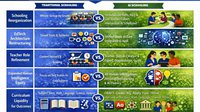
Together, these pillars transition schools from “AI as add‑on” to AI‑native, human‑first institutions—where logistics are intelligent, teaching is more human, and learning is meaningful and market‑relevant. [thelearnin...ounsel.com], [thelearnin...ounsel.com]
Frequently Asked Questions
Will this replace teachers?
No—the Alliance’s stance is explicit: Omni‑AI should unburden teachers from drudgery, reorganize time, and elevate human teaching, not eliminate it. [thelearnin...ounsel.com]
Isn’t this just “more tech”?
It’s less fragmentation, more orchestration. The aim is to reduce tool sprawl and manual glue‑work by introducing a governable Core + Time AI, so humans focus on mentorship, creativity, and community. [thelearnin...ounsel.com], [thelearnin...ounsel.com]
How do we protect students?
By designing the Core secure by design and aligning to recognized frameworks (e.g., NIST AI RMF) alongside FERPA/COPPA obligations—baked into procurement and data governance from day one. [thelearnin...ounsel.com]
Closing Thought
Schools that lead with AI fluency and center the human will earn back time, trust, and relevance. Those that adopt CRAFT will graduate makers, fixers, founders, and neighbors—humans equipped to Create, Rig, Apply, Fuse, and Thrive in an Omni‑AI world. The path is not abstract; it is already being scaffolded through the Omni‑AI Alliance, Time AI, and a growing body of practical guidance from the Learning Counsel. [thelearnin...ounsel.com], [thelearnin...ounsel.com], [thelearnin...ounsel.com]
Sources & Further Reading (selected)
- Omni‑AI Alliance – Overview, Values & AI Fluency: thelearningcounsel.com/pages/omni-ai-alliance/
- From Point Solutions to Omni‑AI Architectures (why AI‑as‑Infrastructure): Article
- What is Time AI? (auto‑cohorting & floating classes): Article
- Breaking the By‑Age Whole Group Pattern with AI Calendaring: Article
- The Emerging AI Schooling Model – Pathflex (space & schedule redesign): Article
- AI vs. Human Intelligence – The Differences (the 5 uniquely human characteristics): Article
- Developing the Human Co‑Intelligences to Balance AI (the revised 9 intelligences): Research
- CRAFT is the New STEM Converse (pillars and outcomes): Article
- STEM Narrative Reassessment (labor reality & family preference trends): Perspective