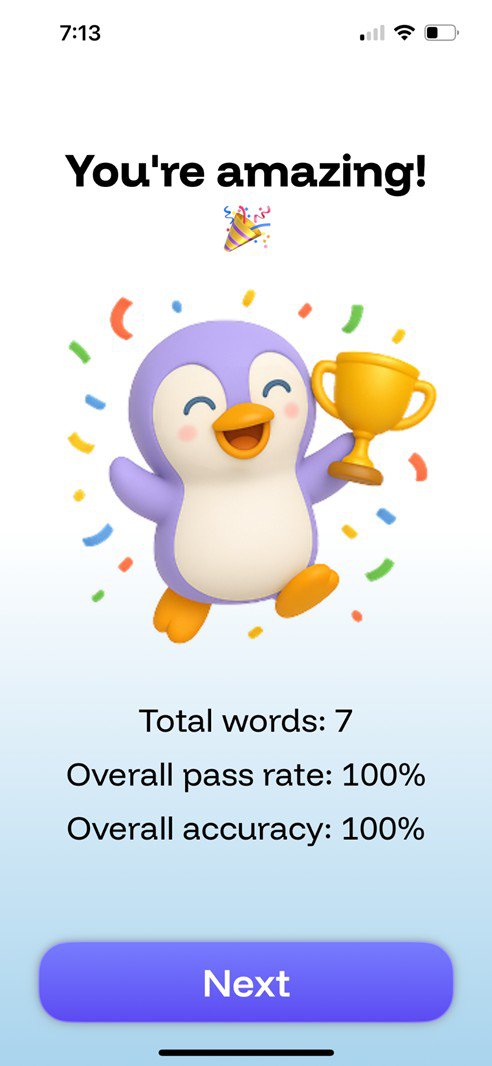
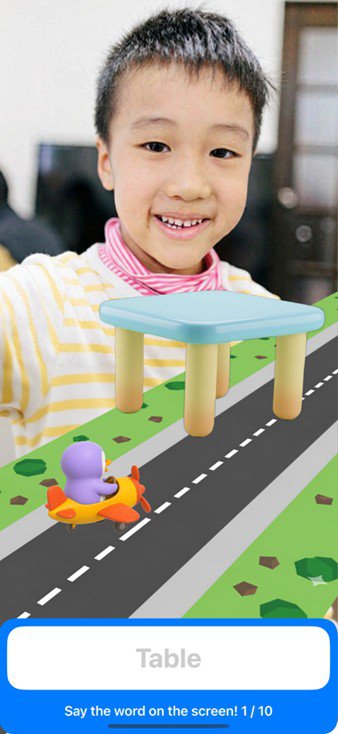
SpeechLP is an AI speech therapy practice app created for children ages 3–9. It transforms traditional articulation practice into a fun, gamified experience kids genuinely want to play. Inside the app, children enter worlds filled with interactive articulation games that target key speech sounds and blends. Instead of repeating words in a dry format, kids use their own voices to guide their character through each environment.
As children play, the embedded AI listens in real time and offers gentle feedback to support clearer articulation. For parents, early childhood educators and speech-language pathologists (SLPs), SpeechLP generates simple yet insightful progress reports that show improvement by specific sounds. Over time, this makes it easy to keep track of development and align efforts across home, school, and clinic. Optional phoneme screenings help schools and clinics rapidly identify articulation goals, offering an efficient way to flag students who may benefit from deeper assessment. Built with privacy in mind, SpeechLP is COPPA- and HIPAA-compliant. The app conducts its analysis on-device and encrypts audio, aligning with security best practices. Compatible with iPhone and iPad, SpeechLP delivers accessible, evidence-based speech practice anytime and anywhere, bridging the gap between formal speech therapy sessions and everyday learning.
Formats:
iPhone and iPad (iOS)
Primary URL:
Problem solved:
SpeechLP helps children practice speech-based articulation games. It solves the problem of limited access to frequent, motivating practice by turning speech therapy exercises into gamified sessions, providing real-time AI feedback, and tracking progress so parents and clinicians can see growth. It also helps schools and clinics quickly screen for articulation goals and monitor progress over time.
Age range:
Children aged 4–9
Does SpeechLLP core/supplemental/special needs/extracurricular/professional development?
It primarily addresses supplemental needs in the context of speech-language therapy, supporting children who are already working with an SLP or need additional articulation practice. It may also support special needs students who have articulation delays. The app serves parent, school, and clinical contexts. It is not meant to replace professional therapy but to support it.
What subject, topic and/or standards is your product mapped to?
SpeechLP is mapped to speech-language development/articulation/phonological processes rather than traditional academic curriculum standards. It focuses on targeted speech sounds (phonemes and blends) and expressive language skills.
How much lesson time does your product need?
Each session/game can be short and flexible: about 2-20 minutes per day depending on the child’s engagement and schedule. The exact recommended duration would depend on the child’s plan, but the gamified design allows for brief, regular practice rather than long sessions.
What is/are the pricing model(s) for your product?
During this beta release SpeechLP is completely free of charge. Pricing plans will be implemented after stakeholder feedback sometime in 2026.
Are there additional services included or needed for your product? Please describe in detail:
Yes. The product is designed to complement, not replace, professional speech-language therapy. Additional services include:
● A licensed SLP for clinical evaluation, goal-setting and therapy sessions. (SpeechLP advises that it is not a substitute for professional therapy.)
● For schools/clinics: The phoneme-screening tool, progress tracking dashboard, and possibly group-administration services may require onboarding, training, or consultation with the SpeechLP team.
● An Apple device with available storage and processing power.
What makes Speech LLP unique?
SpeechLP offers a unique combination of features: gamified articulation practice specifically designed for children, real-time AI listening and feedback, progress reports accessible to both parents and SLPs, and an optional phoneme-screening tool for schools/clinics. The blend of clinical backing, engaging game mechanics, and school/clinic screening support sets it apart in the speech-therapy app space.
Please include a description of the characteristics--how is it designed for user interface (UI) and user experience (UX)? What instructional design principles are at work here?
SpeechLP’s UI/UX is designed for children with bright, engaging game-style visuals, interactive elements, and simplified navigation suitable for ages 4–9. The interface is intuitive, turning speech-practice into game scenarios rather than rote drills. Real-time audio and visual feedback is built into the interaction, making the experience responsive and encouraging. For parents and SLPs, the UI delivers clear progress reports, showing improvements by sound and over time, which supports transparency and motivation.
The app’s instructional design uses principles of gamification (rewards, challenges), immediate feedback (real-time AI listening), adaptive learning (tailoring exercises to each child’s needs), and regular micro-practice (short sessions). It supports spaced, repetitive practice of articulation and expressive language within an engaging context, which aligns with clinical practice for speech-sound development. The inclusion of progress tracking supports metacognition (allowing children and parents to see growth), and aligns with the idea of scaffolding practice between therapy sessions.
Here’s what users are saying:
I checked out the app with my 5-year-old son this morning and he was very excited to try it out. He was smiling and would say “yay!” every time the word switched assuming he said it correctly. It was very engaging!
—Mari Gottlieb, private practice SLP, Boulder, Colorado
Families and clinicians face limited resources and repetitive exercises that can be hard to sustain. With SpeechLP, children can practice more often, stay engaged, and accelerate progress toward their speech goals.
—Sarah Fleishman, private practice SLP, West Palm Beach, Florida
My daughter loves the voice-responsive games. She keeps asking for more. Who knew boring flash cards could be so much fun?
—Emily Copaus, parent, Toronto, Ontario