
For years, the mantra was clear: “Study STEM and you’ll never struggle for work.” Policymakers, educators, and parents pushed science, technology, engineering, and math as the golden ticket to economic security. But the data now tell a different story—one of underemployment, shifting aspirations, and a structural change schools didn’t see coming.
The flip happened quietly. In 2010, federal initiatives and private campaigns poured billions into STEM programs to avert a predicted talent shortage. By 2015, the Bureau of Labor Statistics complicated the narrative, noting both shortages and surpluses depending on discipline. By 2023, the myth unraveled. Reports from Strada Institute, Burning Glass, and the Federal Reserve show underemployment rising and STEM graduates facing job-market friction.
“We built an entire pipeline assuming STEM was a guaranteed ticket,” said Dr. Marissa Chen, labor economist at the Federal Reserve Bank of New York. “But the data now show that half of graduates are underemployed, and some STEM majors have unemployment rates double the average.”
The Numbers Are Alarming
More than 50 percent of STEM graduates are underemployed or working outside their field. Eight percent of recent U.S. graduates remain completely unemployed. Physics majors face a 7.8 percent unemployment rate; computer engineering graduates, 7.5 percent; computer science and chemistry hover around 6.1 percent—well above the overall recent-grad average of 3.9 percent.
“Employers are hiring for skills, not majors,” said Angela Ruiz, VP of Talent Strategy at Burning Glass Institute. “A degree in computer engineering doesn’t guarantee placement if you can’t demonstrate applied AI or automation skills.”
Families Pivoted While Schools Stayed Put
Consumer sentiment signals a tectonic shift. Seventy-eight percent of adults see rising interest in trade careers among youth; half of Gen Z plan to enter a trade, according to Stagwell Global.
Sixty percent of teens prefer starting their own business over a traditional job, reports JA USA and CNBC.
Thirty-seven percent of Gen Z graduates are working in or pursuing skilled trades, according to The Hill.
Ninety-three percent of Gen Z grads and 80 percent of parents agree trades offer better economic security than college. Eighty-five percent of parents support equal or greater funding for skilled-trades education versus four-year colleges.
“Parents are voting with their wallets and their voices,” said Karen Patel, education policy analyst at Stagwell Global. “They want schools to fund trades and entrepreneurship at the same level as college prep.”
Why Schools Missed It
Education systems still organize around age-based cohorts, fixed calendars, and standardized courses—a structure optimized for the “normed middle.” This rigidity makes adaptation slow. By the time schools add new programs, the market has already shifted.
“The lag is structural,” explained Dr. Samuel Ortiz, professor of education systems at ASCD. “Curriculum cycles run on years; labor markets pivot in months.”
The Path Forward: Liquid Curriculum and AI Alignment
To avoid being late again, schools must personalize learning around individual interests and goals, use AI-as-Infrastructure to keep curriculum “liquid,” and integrate Time AI to make scheduling elastic. These tools can enable authentic projects and paid gigs aligned with live labor signals.
“AI can make curriculum adaptive and time elastic,” said tech strategist Jordan Blake. “It’s not about replacing teachers—it’s about giving them tools to align learning with opportunity continuously.”
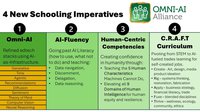
Some educators are already exploring alternatives. A growing movement argues that CRAFT—
Create, Rig, Apply, Fuse, Thrive—is the new STEM converse, emphasizing creativity and adaptability over rigid subject silos. This approach, featured by The Learning Counsel, aims to prepare students for a world where innovation and entrepreneurship matter as much as technical proficiency.
The News is that the STEM shortage era is over. Underemployment and shifting aspirations demand a new architecture—one that prioritizes agency, alignment, and adaptability. If schools don’t pivot now, they’ll keep preparing students for yesterday’s jobs while learners build tomorrow’s careers on their own.
***