
Current Stats
- 50%+ of American STEM grads are underemployed or outside their field.
- 8% of recent STEM grads remain completely unemployed.
- Physics: 7.8% unemployment; Computer Engineering: 7.5%; CS/Chemistry: 6.1%.
- 78% of adults see rising interest in trades; 50% of Gen Z plan to enter one.
- 60% of teens prefer starting a business over a traditional job.
- 85% of parents support equal or greater funding for trades vs college.
For more than a decade, the United States was warned of a looming STEM crisis that never really was. The genesis of the misdirection was corporations lobbying for cheaper labor.
The effect on schools convinced that STEM was the focus most needed? Wholesale loss of respect and relevancy in national consumer sentiment. Believing without evidence the mainstream profit-motivated misdirection has truly clobbered both K-12 and Higher Ed.
This is one time school leaders should be grateful that they stuck to archaic core curriculum subjects and weren’t overly trendy. Except that now there is an even more urgent need to “right the ship” with lightning speed in another direction.
What Happened
Policymakers, industry leaders, and education advocates claimed the nation faced a severe shortage of science, technology, engineering, and math talent—a gap that threatened innovation and global competitiveness. Billions were invested in STEM programs, scholarships, and campaigns to steer students toward technical degrees.
But the shortage never materialized. The alarm bells were based on projections, not hard evidence.
There was no algorithm estimating tech productivity gains for labor projections different than the industrial age companies, no recognition of the pattern that tech’s nature Is deflationary. Each wave of innovation—virtualization, SaaS, DevOps, AI—compresses complexity into fewer steps, reducing headcount needs.
Reports in the early 2000s forecast explosive growth in STEM jobs and warned that the supply of graduates would fall short. Yet economists repeatedly noted the absence of direct indicators of scarcity. Kenneth Arrow and William Capron flagged this as early as 1959, and by the 2010s, scholars like Michael Teitelbaum and Ron Hira were calling the shortage narrative “inconsistent with nearly all available evidence.”
“The alarms about widespread shortages are quite inconsistent with nearly all available evidence,” Hira wrote in a 2014 analysis.
True labor shortages drive wages up. That never happened for STEM fields. From 2008 to 2023, real pay for STEM workers grew by only 0.15 percent per year, according to Bureau of Labor Statistics data. In fact, total compensation fell after the pandemic. “If employers are desperate for more STEM workers, why have they been lowering the compensation offered?” asked Steven A. Camarota of the Center for Immigration Studies.
Meanwhile, employment data revealed a mixed picture. A 2015 BLS report described “shortage and surplus” dynamics: some specialties, like nuclear engineering, faced tight labor markets, while others—such as biology PhDs—were oversupplied.
No evidence supported a universal STEM shortage.
STEM Unemployment is currently widespread
Fast forward to 2025, and the situation has flipped entirely. Underemployment among college graduates is widespread. Strada Institute and Burning Glass report that more than half of graduates work in jobs that don’t require a degree, and nearly half remain underemployed a decade later. STEM graduates are not immune: recent data from the New York Fed show unemployment rates of 7.8 percent for physics majors and 7.5 percent for computer engineering—well above the overall average for new grads.
The Timeline
- 1960s–1970s: U.S. companies began offshoring manufacturing (e.g., electronics, textiles) to countries with lower labor costs, such as Mexico and Japan. [fullscale.io], [gitnux.org]
- 1980s–1990s: Offshoring expanded into services; banks and IT functions moved to low-cost locations. Major turn toward India for software development & IT outsourcing. [onshoringamerica.com], [fullscale.io]
- 1999–2003: Temporary increases the Visa employment the cap from 65,000 to 115,000 brought in per year in 1999–2000 and 195,000 in 2001–2003 to meet growing demand. [ssti.org], [visualcapitalist.com]
- 2000s onward: The rise of the internet and globalization intensified tech offshoring with greater than 300,000 new/additional U.S. jobs being offshored, with an estimated 62% falling in software development and IT. [demandsage.com], [gitnux.org], [onshoringamerica.com]
- 2010–2015:STEM shortage warnings dominate policy.
- 2015: BLS reports “shortage and surplus” across STEM fields.
- In 2024, Frost & Sullivan reported that over 36 months, 826,540 IT jobs were offshored, supporting an offshore IT workforce of an estimated 7.6 million globally, with the U.S. responsible for much of that transition. [ncses.nsf.gov] Nearly 400,000 H‑1B Visa approvals were issued for foreign workers to come into America (counting new entries and renewals), with over 60% employed in tech roles, among other visa types. [pewresearch.org], [insidehighered.com]
- FY2024: A 2025 survey showed 55% of U.S. tech employees work alongside H‑1Bs, who make up an average of 17% of their teams. [cdn.prod.w...-files.com], [insidehighered.com]
- In 2025, 57% of U.S. tech workers said their companies employed outsourced coworkers, comprising 44% of staff in affected firms.
- 2023–2025: American underemployment rises; STEM unemployment hits 6–8% while Visa workers take up 2.04 million of the available jobs and another 1.86 million tech roles moved overseas. [cnbc.com], [oxfordeconomics.com]
The STEM shortage was a prediction that proved false. Part of this was an open floodgate given to corporations using the “shortage” to mass import cheaper labor or offshore labor in the millions of jobs.
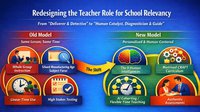
The real crisis is that schools are currently not seen as relevant. Enormous frustration in the American population is at a boiling point. It’s structural: education systems built for averages, not individuals, and curriculum cycles too slow to keep pace with labor markets. Schools must pivot now—or risk being late again while learners build their futures, outside the system if they can.
Call to Action
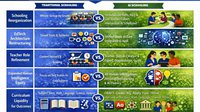
- Break the factory model. Move to ultra-personalization regardless of age or grade and adapted to interest, an AI-enabled “liquid curriculum.” Transform your schools structure of time, space and teaching and learning resources distribution. The factory model of education was never designed for cognition equity or the full diversity of humanity; it was designed for efficiency. It is quite the opposite of inclusive at many levels, though educators try hard to make it so. A hard look at the new model Pathflex and uses AI logistics needs to be done at every school or district’s very next Board meeting.
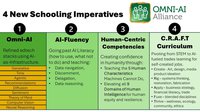
- Adopt Pathflex (AI) Schooling is an educational model in which learning is individually paced and continuously adaptive, with time treated as the primary variable. Learners construct knowledge along personalized pathways while being dynamically intersected with live teaching and peer cohorts at precisely matched cognitive points through Omni-AI—especially Time AI. [Knowstory.com] Reference a link here to the other PathFlex story just sent to you
- Move to AI-as-Infrastructure to stay ahead of trends.
- Not consumer-AI and not just a lesson-planning platform. Schools need to envelope AI and use it securely with integrations to other systems and their own data. Companies like Brainfreeze/Airia are ideal for this.
- Pull in regular live labor signals into curriculum. Schools should ingest weekly labor data and tune modules/projects to employer-demanded competencies (AI workflows, cybersecurity operations, DevOps baselines). This directly addresses underemployment’s first‑job choke point. [businesswire.com]
- Adopt the CRAFT curriculum framework as a counterweight. Emerging frameworks like CRAFT—Create, Rig, Apply, Fuse, Thrive—emphasize production over memorization, aligning learners to monetizable outputs rather than legacy course silos and will all co-partner with AI. [bls.gov], [ibm.com] Reference: “CRAFT is the new STEM converse.”
Sources & Further Reading
- BLS Monthly Labor Review: “STEM crisis or STEM surplus? Yes and yes” (May 2015). [wisconsinr...ghtnow.com]
- Issues in Science & Technology (Summer 2022): “Is There Really a STEM Workforce Shortage?” (Hira). [usatoday.com]
- BLS ECEC analysis via CIS: STEM compensation trends (2008–2023). [fred.stlouisfed.org], [kansas.ja.org]
- Strada/Burning Glass: Talent Disrupted (Feb. 2024). [best-trade...chools.net]
- NY Fed: The Labor Market for Recent College Graduates (Q3 2025). [businesswire.com]
- CNBC summary of NY Fed majors data (May 16, 2025). [morningstar.com]
- H‑1B footprint: Newsweek (Aug. 1, 2025), Statista. [equityinhighered.org], [insidehighered.com]
- Offshoring: DemandSage (2025), LinkedIn analysis (2025), Frost & Sullivan offshore IT study. [cnbc.com], [oxfordeconomics.com], [ncses.nsf.gov]