


A Working Convening for K–12 Educators and School Leaders
Schools are navigating a period of real strain—overburdened teaching, rising attrition, fragmented workflows, expanding screen use, and rapid AI infiltration without clear guardrails. This free, in‑person Learning Futures & Technology Media Meeting is designed to address those realities directly.
Rather than professional development or product demos, the day is structured around short System Labs, leadership conversations, and market briefings that help educators and administrators think clearly about what must change, what must stabilize, and what should remain distinctly human in schooling.
The program includes a research briefing and keynote by LeiLani Cauthen, education researcher, author, futurist, and architect of Time AI, followed by rotating Labs, local administrator perspectives, and a curated edtech showcase framed as market intelligence—not endorsement.
Participants may earn 0.5 CEU units through Learning Counsel Research with full‑day attendance.
Registration is required to support meal planning and seating logistics. Attendance is free.
Agenda
7:30 – 8:15 a.m.
Welcome & Introductions
8:15 – 9:00 a.m.
Learning Counsel Research Briefing & Introduction to Time AI - LeiLani Cauthen, Education researcher, author, futurist, and architect of Time AI for Learning
LeiLani Cauthen is CEO of Learning Counsel and a national voice on how time, coordination, and human purpose are being re‑engineered in K–12. Her work focuses on designing operational models that reduce overload, restore coherence to instruction, and guide responsible use of AI—without losing what must remain human in education.
9:00 – 10:30 a.m. System Labs (Rotating Workshops)
- Teaching Is Too Much: Where Time Is Lost
- Screens, Phones, AI & Attention
- Human Curriculum: What Is It?
10:30 – 10:40 a.m. Break
10:40 – 11:10 a.m. Guest Speaker – Innovations & Challenges
11:10 – 11:30 a.m. Edtech Showcase – Market Signals & Practitioner Feedback
11:30 – 12:00 p.m. Lunch + Video Showcase at 11:50 a.m.
12:00 – 12:45 p.m. Lab 4 – Stabilizing Your Institution
12:45 – 1:30 p.m. Guest Speaker or Edtech Showcase
1:30 – 2:00 p.m. Featured Educator Panel Discussion – Pride of Place, Human Branding, Practical AI Takeaways
See Long Version of Agenda Below
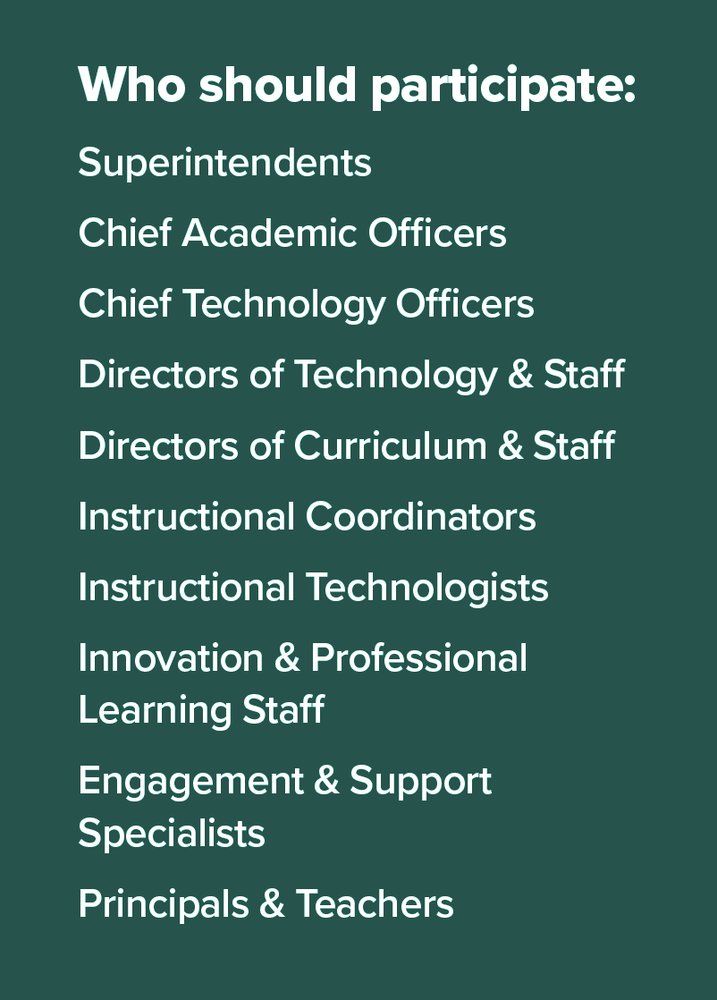
Why Attend — For Superintendents, CAO/CIO, Curriculum & Tech Coordinators
- Gain clarity on system pressures driving attrition, overload, and fragmentation—and what actually stabilizes institutions.
- Compare approaches to AI, attention, and instructional workflow without committing to tools or vendors.
- Hear direct market signals from edtech providers with structured feedback, not sales conversations.
- Leave with decision frameworks you can use in cabinet, board, and budget discussions.
Why Attend — For Principals & Site Leaders
- Name what’s making teaching unsustainable—and what should not be landing on classrooms.
- Explore practical boundaries for screens, phones, and AI that teachers can actually enforce.
- Bring coherence to expectations around instruction, behavior, workload, and attention.
- Take back frameworks that help you support teachers without micromanaging.
Designed for leaders managing real people, real days, and real pressure.
Why Attend — For Teachers, Teacher‑Leaders, Librarians & Media Specialists
- Be part of the conversation about why teaching feels like too much—and what can change.
- Get clear about what should not be your burden (AI policing, inconsistent policies, system gaps).
- Contribute your perspective on screens, attention, and human learning in a way that’s heard by decision‑makers.
- Leave with shared language you can use to advocate for sustainable practice.
This is about operating differently under current constraints—not adding initiatives.
This is not professional development, training, or evaluation—it’s system‑level problem solving.
Agenda Long Version
Welcome & Research Briefing
7:30 – 9:00 a.m.
The morning opens with introductions and a Learning Counsel research briefing grounded in current conditions facing K–12 schools: teacher workload, attrition pressures, student engagement strain, budget realities, and accelerating AI presence. The session introduces Time AI not as a product pitch, but as a lens for understanding how time, coordination, and workflow increasingly determine whether instructional systems hold together—or fracture under pressure.
This briefing establishes the shared context for the day: schools are not short on effort or vision; they are operating in environments that require fundamentally different structures.
System Labs (Rotating Sessions)
9:00 – 10:30 a.m.
Participants rotate through three 30‑minute System Labs designed to surface real conditions and produce usable frameworks. These are not professional‑development workshops or tool trainings; they are system diagnosis and decision labs relevant to district leaders, principals, teacher‑leaders, librarians, and IT teams alike.
- Lab 1 – Teaching Is Too Much: Where Time Is Lost
This lab examines the growing gap between contracted work and actual workload. Participants identify where teacher time is being unintentionally consumed by duplicated processes, administrative drift, fragmented planning expectations, and misaligned systems. The focus is on workload created by design, not individual performance.
Attendees leave with a shared language for distinguishing essential work from accidental work—and for identifying which pressures should be redesigned, absorbed by systems, or removed altogether.
- Lab 2 – Screens, Phones, AI & Attention
Attention has become one of the most fragile resources in schools. This lab tackles how devices, platforms, and AI intersect with classroom focus, behavior, and learning—without framing the issue as pro‑ or anti‑technology. Participants discuss what belongs in policy, what belongs in routines, and where teacher judgment must be supported rather than undermined.
The session addresses practical realities: enforcement fatigue, laptop misuse, AI infiltration, parent expectations, and equity concerns—helping institutions draw clear, defensible boundaries that protect learning time.
- Lab 3 – Human Curriculum: What Is It?
As systems automate and instruction becomes increasingly tool‑mediated, this lab clarifies what education must remain distinctly human. Participants define the Human Curriculum—judgment, ethics, meaning‑making, trust, curiosity, and purpose—and discuss how these capacities must be protected rather than squeezed out by efficiency pressures.
This session is not philosophical abstraction; it is about role clarity. Attendees leave with a shared understanding of what should never be offloaded to machines or compliance systems, even in highly optimized environments.
Guest Speaker & Edtech Showcase
10:40 a.m. – 12:00 p.m. - Guest Speaker
A local district leader shares firsthand insights on innovations and challenges currently shaping school operations. This is followed by an Edtech Showcase, framed as market intelligence rather than endorsement. Participants hear directly from technology providers and use structured feedback tools to signal interest, concerns, and relevance. The goal is transparency: seeing what is emerging, identifying what aligns with institutional needs, and naming red flags early—without obligation.
Lunch follows with a brief video showcase highlighting examples of emerging practices.
12:00 – 12:45 p.m.
Lab 4 – Stabilizing Your Institution
This whole‑group lab brings the day together. After examining workload strain, attention challenges, and the Human Curriculum, participants focus on stabilization—what schools must adjust now to stop attrition, restore coherence, attract families, and operate differently than in the past.
The discussion centers on practical levers: workflow redesign, mindset shifts, boundary‑setting, and leadership decisions that reduce friction rather than add initiatives. Attendees leave with a 90‑day stabilization lens they can take back to their institutions.
Closing Conversations
12:45 – 2:00 p.m.
The afternoon includes either an additional guest speaker or targeted edtech showcase, followed by a panel discussion on Pride of Place, Human Branding, and Practical AI Takeaways. The closing conversation reinforces a central theme of the day: technology and systems matter—but institutional identity, human leadership, and trust matter more.
Educators who attend the full event are eligible to receive 0.5 CEU units through Learning Counsel Research. Certificates will be provided following the meeting.
Co-Produced with:

Proudly supporting school district superintendents via recognitions, resources, and relationships. NASS helps Superintendents refine their expertise on Board relations, career moves, contracts, equity, innovative ideas, leadership, starting as a new Superintendent, avoiding pitfalls, performance evaluations, professional image and other tips.
Address:
TBD