Why Use InvenStory?
Most schools and districts accumulate resources, platforms, subscriptions, services, devices, and processes over time. New purchases are added to solve immediate needs, while older investments are rarely reviewed with the same rigor. The result is often fragmented systems, overlapping resources, hidden costs, duplicated effort, unclear ownership, and growing complexity.
InvenStory was designed to create visibility before decisions are made.
This workbook helps educators, academic leaders, technology teams, procurement officers, legal reviewers, and executive leadership inventory what exists, evaluate usefulness, identify redundancy, compare alternatives, document evidence, and improve accountability. Rather than relying on assumptions, individual opinions, or vendor claims, teams can create a defensible record of what resources are being used, by whom, for what purpose, at what cost, and with what results.
The goal is not simply reduction. The goal is intelligent organization.
Schools need the ability to see where resources overlap, where gaps exist, where workflows create unnecessary burden, where costs can be justified, and where investments are no longer aligned to learner needs or institutional goals. Visibility creates the opportunity for discernment. Discernment enables better decisions.
As educational environments face increasing financial pressure, staffing challenges, changing learner expectations, AI-driven transformation, and growing demands for personalization, institutions must regularly examine whether their current structures, systems, and resource portfolios remain viable. Organizations that can clearly see themselves are better positioned to adapt, simplify, improve outcomes, and remain sustainable.
Use this workbook to:
- Create a complete inventory of resources, systems, and services.
- Identify unnecessary duplication and redundancy.
- Evaluate instructional, operational, financial, legal, and technical value.
- Improve accountability for purchasing and renewal decisions.
- Reduce workflow complexity and hidden costs.
- Strengthen alignment between investments and learner outcomes.
- Support audits, reviews, strategic planning, and continuous improvement.
- Build a more efficient, adaptable, and viable learning organization.
See clearly. Exercise discernment. Reduce redundancy. Improve accountability. Improve outcomes. Build long-term viability.
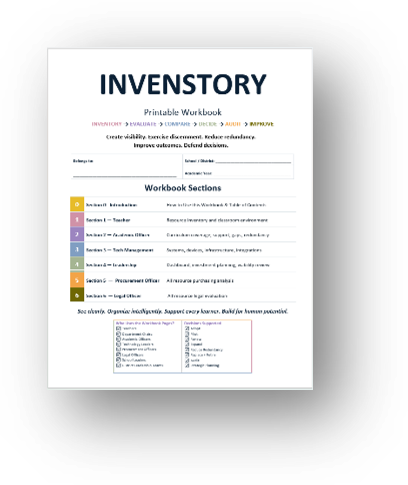
Invenstory Workbook
This workbook helps educators, academic leaders, technology teams, procurement officers, legal reviewers, and executive leadership inventory what exists, evaluate usefulness, identify redundancy, compare alternatives, document evidence, and improve accountability. Rather than relying on assumptions, individual opinions, or vendor claims, teams can create a defensible record of what resources are being used, by whom, for what purpose, at what cost, and with what results.
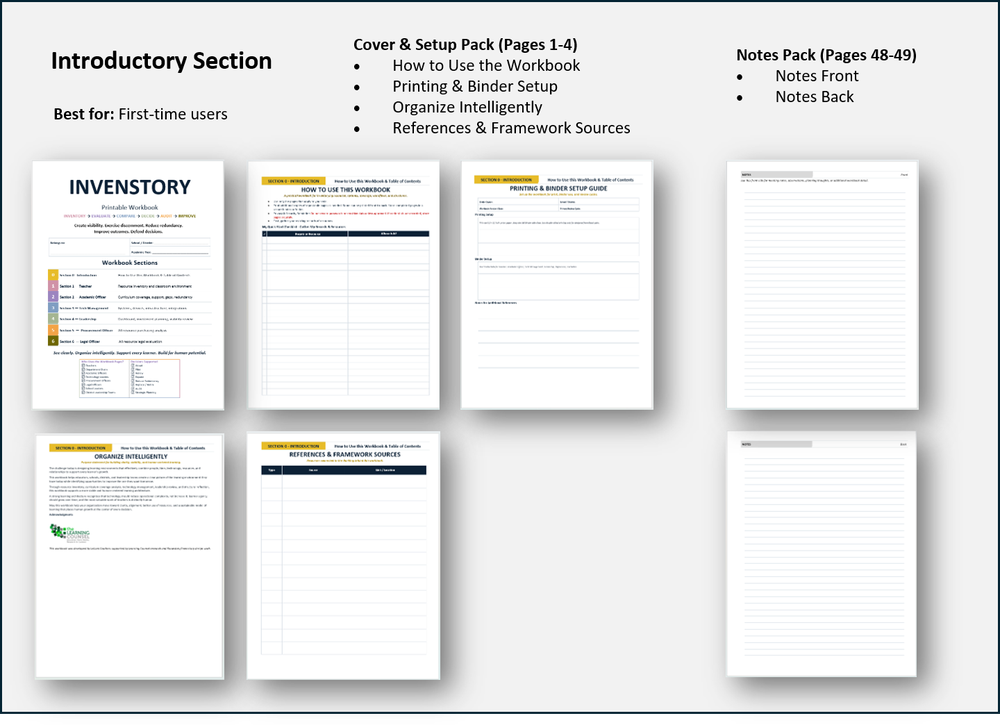
Includes Pages: Introduction & Setup Pack - Pages 1-4
- How to Use the Workbook
- Printing & Binder Setup
- Organize Intelligently
- References & Framework Sources
Best for: First-time users, includes notes pages from the very back.
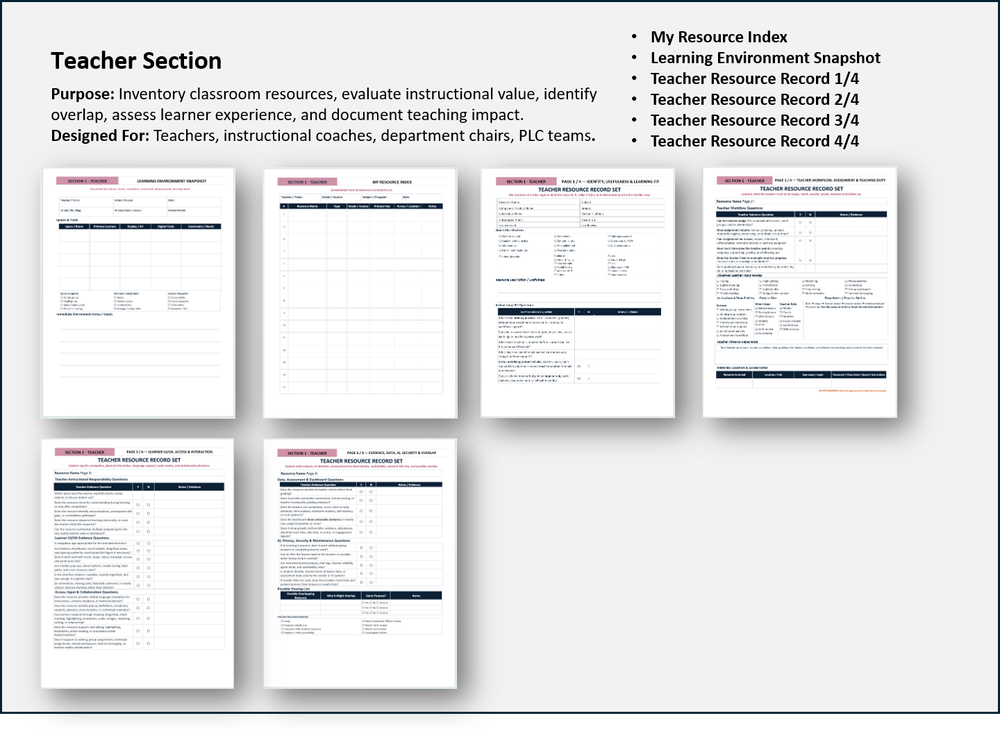
Includes Pages : 5–10
My Resource Index
Learning Environment Snapshot
Teacher Resource Record 1-4
Purpose: Inventory classroom resources, evaluate instructional value, identify overlap, assess learner experience, and document teaching impact.
Designed For: Teachers, instructional coaches, department chairs, PLC teams.
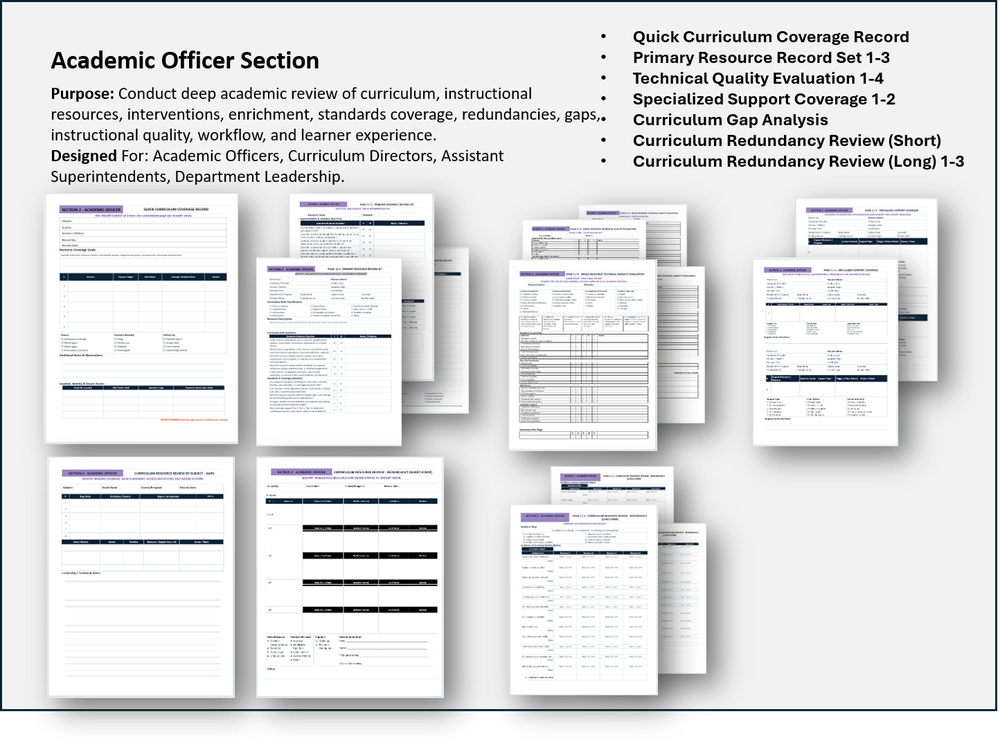
Includes Pages: 11–25
Quick Curriculum Coverage Record
Primary Resource Record Set 1-3, Technical Quality Evaluation 1-4, Specialized Support Coverage 1-2
Curriculum Gap Analysis, Curriculum Redundancy Review (Short), Curriculum Redundancy Review (Long) 1-3
Purpose: Conduct deep academic review of curriculum, instructional resources, interventions, enrichment, standards coverage, redundancies, gaps, instructional quality, workflow, and learner experience.
Designed For: Academic Officers, Curriculum Directors, Assistant Superintendents, Department Leadership.
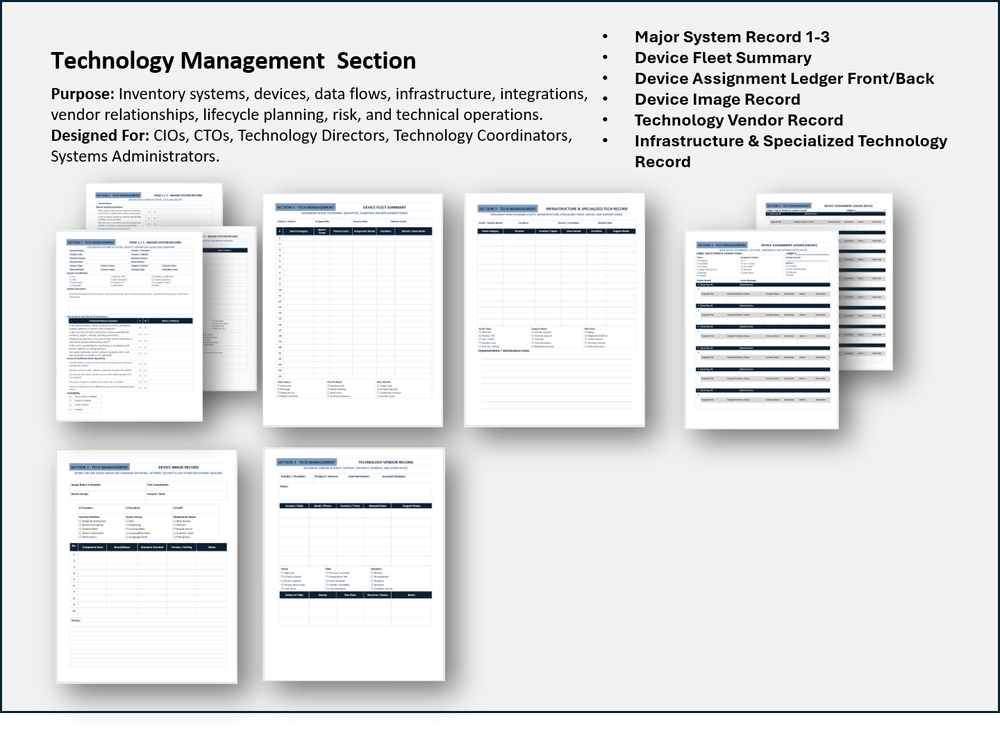
Technology Management Section Kit
Includes Pages: 26–34
Major System Record 1-3
Device Fleet Summary
Device Assignment Ledger Front, Device Assignment Ledger Back
Device Image Record, Technology Vendor Record, Infrastructure & Specialized Technology Record
Purpose: Inventory systems, devices, data flows, infrastructure, integrations, vendor relationships, lifecycle planning, risk, and technical operations.
Designed For: CIOs, CTOs, Technology Directors, Technology Coordinators, Systems Administrators.
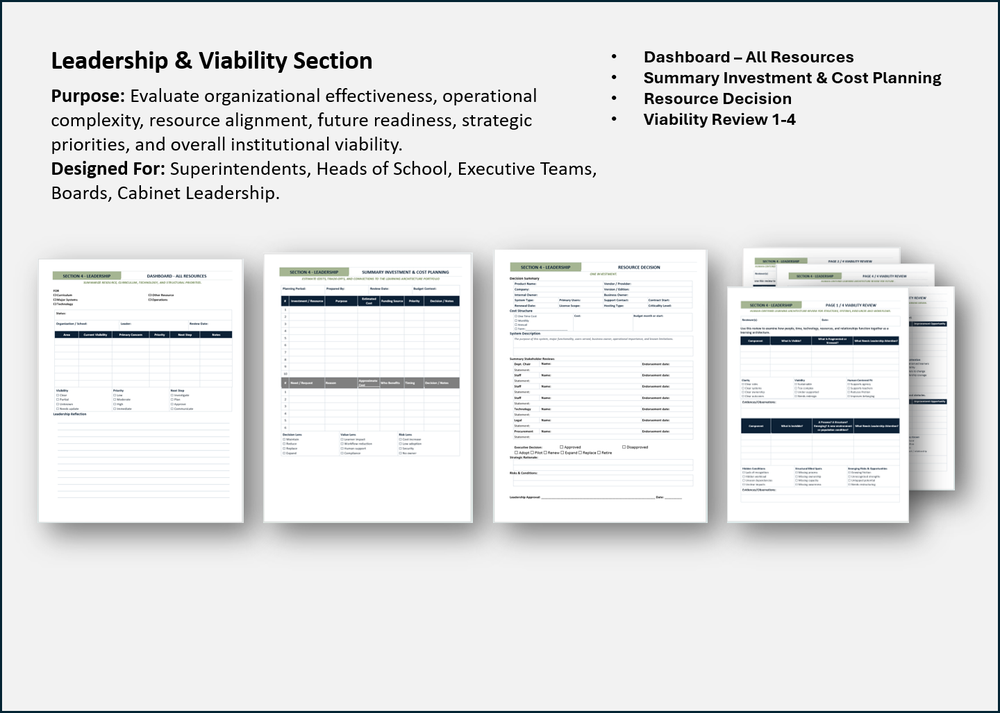
Leadership & Viability Section Kit
Includes Pages: 35–41
Dashboard – All Resources
Summary Investment & Cost Planning
Resource Decision
Viability Review 1-4
Purpose: Evaluate organizational effectiveness, operational complexity, resource alignment, future readiness, strategic priorities, and overall institutional viability.
Designed For: Superintendents, Heads of School, Executive Teams, Boards, Cabinet Leadership.
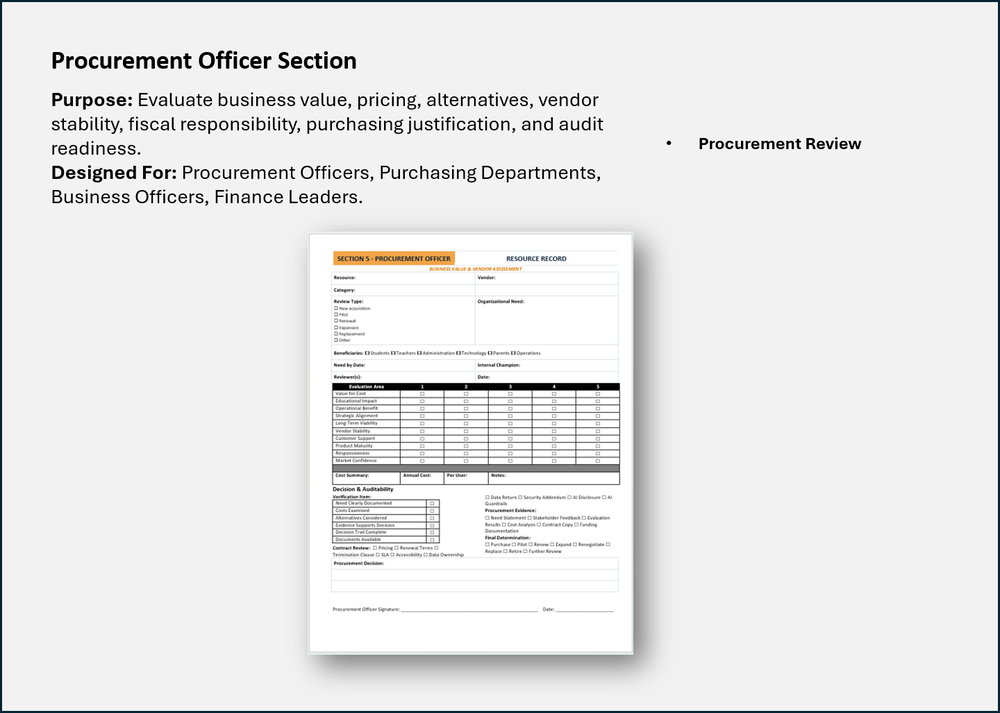
Procurement Officer Review Kit
Includes Page 42
Procurement Review
Purpose: Evaluate business value, pricing, alternatives, vendor stability, fiscal responsibility, purchasing justification, and audit readiness.
Designed For: Procurement Officers, Purchasing Departments, Business Officers, Finance Leaders.