When school leaders think about safety technology, it is easy to focus first on the systems we can see: locks, cameras, emergency protocols, and other physical security measures. Those investments matter, and they always will. Schools have a responsibility to create secure learning environments and prepare for a wide range of emergencies.
But conversations about school safety increasingly point to a broader reality: the strongest safety strategies extend far beyond physical security. Students are safer when they feel connected, supported, and known—and when the adults responsible for them have the tools and information they need to communicate and respond effectively.
That means school safety cannot be viewed solely as a security challenge. Student well-being, mental health, school climate, communication, and belonging all play an important role in creating safe learning environments.
These issues are often discussed as separate challenges. In practice, they are deeply connected.
When students feel disconnected from school, the effects often appear long before a crisis emerges. Educators may see changes in attendance, engagement, behavior, or academic performance. Students who feel isolated may also be less likely to seek help when they need it or report concerns when they see something troubling.
By contrast, students who feel connected to their school community are more likely to engage positively with peers and adults, participate in school activities, and reach out when they need support. That is why belonging deserves a larger place in the school safety conversation.
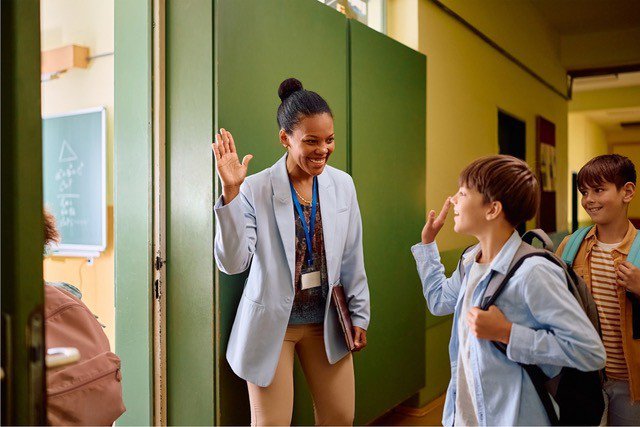
Across conversations about creating safer schools, one principle comes up repeatedly: students need trusted adults in their lives. Those relationships can become especially important when a student is struggling, worried about a friend, experiencing a mental health challenge, or concerned about something happening in the school community. Those conversations matter because they create opportunities for intervention before a situation escalates.
Building Safety Through Connection
One of the most encouraging developments in recent years has been the growing recognition that school safety and student well-being are inseparable. Districts are investing in counseling services, student support programs, mental health resources, and early intervention strategies. Schools are also creating more opportunities for student voice and engagement while helping educators strengthen relationships with students and families.
These efforts are not separate from safety planning. They are part of safety planning.
Effective school safety requires a layered approach. Physical security measures, emergency preparedness, staff training, communication systems, student support services, and school culture all contribute to a comprehensive strategy. When one of those layers is missing, the overall system becomes less effective.
Culture, however, is often the layer that requires the greatest commitment because it cannot be installed or purchased. It must be built over time through consistent leadership, meaningful relationships, and a shared commitment to supporting students. That culture also extends beyond the school building.
No district can build a strong safety culture in isolation. Families, community organizations, mental health providers, law enforcement agencies, and local leaders all play important roles in supporting students. The strongest school safety efforts are not isolated initiatives. They are community commitments built around a shared understanding that student success and student safety go hand in hand.
Asking Better Questions About Safety Technology
Technology has an important role within this broader strategy, but its value should be measured by how well it supports the people responsible for keeping students safe. The most effective solutions help educators communicate clearly, share critical information, respond confidently during emergencies, and create learning environments where students can stay connected and engaged.
Technology should strengthen the human systems around school safety—not attempt to replace them.
As district leaders continue evaluating safety priorities, it may be worth broadening the questions they ask. Beyond the cameras, locks, and protocols:
● Can every student clearly hear critical information—whether it’s everyday instruction, a schoolwide announcement, or an emergency communication?
● Can teachers and staff quickly communicate or call for assistance from wherever they are in the classroom or school?
● Do our communication systems support both everyday teaching and emergency response, or are we relying on separate tools that may be unfamiliar when a crisis occurs?
● Do students know where—and to whom—they can turn when something feels wrong?
● Do educators have the training, tools, and confidence to respond when a student raises a concern?
● Are families and community partners part of our safety strategy before a crisis occurs, rather than brought in only afterward?
● Are we paying attention to changes in attendance, behavior, or engagement that may signal a student needs support?
● Are our safety technologies working together as part of a coordinated strategy, or are we asking educators to navigate disconnected systems when every second matters?
● Most importantly, are we creating a school culture where students feel seen, heard, and valued?
The answers can reveal gaps that no single security system can address. They can also help districts understand whether their investments are working together as part of a broader safety strategy—or simply operating as a collection of individual tools.
School safety will always require preparation, planning, and vigilance. But lasting safety is also built through relationships. It is built through trust. And it is built through school cultures that help every student know they belong.
Those investments may be less visible than a camera or a locked door, but their impact can last far longer.
About the Author:
David Solomon serves as the CEO of Lightspeed Technologies, Inc.