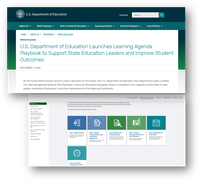

The California Department of Education has posted its statewide guidance on reducing chronic absenteeism — the research-backed playbook Education Code 48326 requires districts to have in place by this fall. The list is specific: screen students for barriers to attendance, build absence intervention plans, make home visits, hold wellness check-ins, offer workshops for families, partner with community agencies, and form schoolsite absence intervention teams.
The law itself passed in 2024 and took effect that January, so these seven strategies existed well before the state ever published implementation guidance for them. When I first read the list, it already described work we'd been doing for a year. We're two years in now, with attendance gains both years — a 2-percentage-point jump in 2025-26 pushed us above 94% districtwide. If I could add one thing to the state's guidance, it's this: sequence matters. Screening, intervention plans, home visits, wellness check-ins — none of it works if a family never gets the message in the first place. Contactability has to come first. Every other strategy in the law assumes you can already reach the household you're trying to help.
Mountain View School District serves over 4,700 students in the San Gabriel Valley, one of the most diverse regions in the country by race and ethnicity. Ninety-three percent of our students are Hispanic or Latino, and in nearly every home, a language other than English is spoken. We came out of the pandemic with attendance numbers that told a hard story, as most California districts did. What those numbers didn't tell us was why a student was gone. That's what we had to fix first.
Chronic absenteeism usually gets handled as a compliance problem — a threshold gets crossed, a letter goes out, a referral gets filed. We stopped doing it that way. Behind an empty seat is usually a question nobody's asked yet: does the family's contact info still work? Did the schedule-change notice arrive in a language the parent reads? Is there a housing move, a health issue, a sibling who needs watching? A truancy letter answers none of that.
So, before we touched intervention plans, we rebuilt something more basic — contactability, meaning we could actually get a real conversation going with every family. We audited how many households would receive and understand a message today, in their language, on a device they check. That work was unglamorous. We cleaned up contact data. We moved from one-way notices to two-way conversations. We translated outreach ourselves instead of counting on families to do it. Every intervention the state now recommends leans on this groundwork. You can't make a home visit to an address nobody verified. You can't invite a family to a workshop they never heard about.
Once that foundation existed, the rest of the 48326 playbook became usable. Attendance data caught patterns early, while a few absences could still be solved with a phone call instead of a form. Our school teams — what the new guidance calls "schoolsite absence intervention teams" — met about the students behind those patterns. Outreach started with a question and support, not a citation. And when a family's barrier was bigger than a school could handle on its own like transportation, health care, or housing, our community partners picked it up from there.
Two years later, our district’s attendance has improved because we’ve built authentic relationships from the ground up. Families pick up when we call, and call us back when we can't reach them.
For districts just starting on the state's guidance this year, screening tools and intervention teams don't work if a district can't reliably reach the families they're supposed to serve. The ones who succeed won't treat the mandate as a compliance checklist. They'll treat it for what it actually is — a description of what staying connected to every family, every day, looks like in practice.
About the author
Dr. Mercedes Gómez is the Assistant Superintendent of Educational Services at Mountain View School District in El Monte, CA.