
|
News Release October 22, 2018 Contact: Lisa Lederer 202/371-1999
By Large Majorities and Across Demographic Lines, Americans Support Afterschool Programs
New Poll Released As National Rally for Afterschool Approaches WASHINGTON – A national poll released today finds that vast majorities of the public – across gender, race, age, regional and party lines – consider afterschool programs to be important to their communities. There is also strong support for public funding of afterschool and summer learning programs, with two in three adults saying they want their federal, state and local leaders to provide funding for afterschool and summer programs. Seven in ten adults oppose eliminating federal funds for afterschool programs, as President Trump has twice proposed to do, and 52 percent are strongly opposed. The poll was designed by the bipartisan team of Lake Research Partners and the Tarrance Group and administered by Ipsos through an online omnibus survey from September 7 – 9, 2018. It reached 1,001 adults nationwide. “This new poll shows clearly that Americans understand the pivotal role that quality afterschool programs play in helping young people develop the skills they need to thrive in school and in life,” said Afterschool Alliance Executive Director Jodi Grant. “We need to increase funding so we can meet the demand for these essential programs, which keep kids safe, inspire them to learn, and give parents peace of mind that their children are safe, supervised and learning after the school day ends. The country recognizes that afterschool and summer learning programs help children reach their full potential and ready them for the jobs of tomorrow. Lawmakers need to understand that too.” The poll is being released in conjunction with Lights On Afterschool – the national rally for afterschool programs, which is Thursday. On that day, a million people will rally for afterschool at 8,000 events across the country. Lights On Afterschool is organized by the Afterschool Alliance. The poll also found:
In both his FY2018 and FY2019 budgets, President Trump proposed eliminating federal funds for 21st Century Community Learning Centers, the chief federal funding stream for afterschool and summer learning. Both times, Congress rejected the proposal – but federal afterschool funding remains under threat. The America After 3PM household survey of more than 30,000 families, commissioned by the Afterschool Alliance, found that participation in afterschool programs has increased to 10.2 million students nationwide, up from 6.5 million in 2004. But the unmet demand for afterschool programs has increased as well. Today, for every child in an afterschool program, there are two more whose parents say they would participate, if a program were available. Unmet demand is especially high in rural communities and communities of concentrated poverty. One in five students in the country is unsupervised after the school day ends. The poll was conducted online in Ipsos’s Omnibus using the web-enabled “KnowledgePanel,” a probability-based panel designed to be representative of the U.S. general population, not just the online population. The study consisted of 1,001 nationally representative interviews conducted between September 7 – 9, 2018, among adults aged 18+. The margin of error is +/-3 percentage points. The new poll’s base sample was weighted by gender, metropolitan and non-metropolitan status, age, educational attainment, race, household income and geographic region by race to reflect attributes of the actual population. # # # # The Afterschool Alliance is a nonprofit public awareness and advocacy organization working to ensure that all children and youth have access to quality afterschool programs. More information is available at www.afterschoolalliance.org. |
Industry News

By Large Majorities and Across Demographic Lines, Americans Support Afterschool Programs
Tags:
Recent Articles
Popular Stories
Removing the Work Around the Work

There is the work of teaching, and then there is all the work required to make teaching po…
AI Is Saving Teachers Time. They’re Still Not Ready to Trust It.
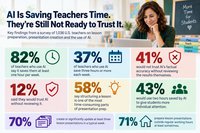
There has been no shortage of promises about what artificial intelligence is going to do f…
Why Did Schools Swerve?

I guess shaming educators works to bring them to an abrupt about-face. But I'm not a …
Beyond Locks and Cameras: Building a School Safety Culture That Lasts

When school leaders think about safety technology, it is easy to focus first on the system…
How K-12 IT Leaders Can Build Teams That Last

There is a version of school technology work that looks efficient from the outside but is …
Eight States Quietly Begin Testing a New Operating System for Education Improvement as Federal DOE Releases Learning Agenda Playbook
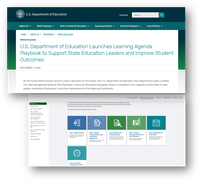
The U.S. Department of Education officially released the Learning Agenda Playbook, a new f…
Beyond the Dashboard: Why More Data Isn't Solving Chronic Absenteeism

When I visit our K-12 partners out on the road, I always ask to see their attendance dashbo…
What's New in K-12: Coherent Curriculum Intelligence

Author’s Note: I did not arrive at the frameworks that follow as an academic theorist…
The Cognitive Training Debate Is Over. The Education Conversation Is Finally Beginning.

When Brain Age appeared on the scene in 2005, it introduced millions of people to a provoc…
How Mountain View School District Built Two Years of Attendance Gains by Fixing Contactability First

The California Department of Education has posted its statewide guidance on reducing chr…