
I am craving a serious public debate about the anti-screen movement now influencing school policy. The problem is not that critics are asking questions about screen use — they should. The problem is that sweeping claims about “screens harming learning” are being amplified into national policy conversations without enough discernment about implementation, instructional design, student readiness, teacher workload, or the structural constraints schools actually face.
The first error in the anti-screen movement is category collapse: a smartphone with TikTok, YouTube, games, and social media is not the same thing as a constrained instructional platform, adaptive math pathway, assessment tool, accessibility support, AI tutor, or teacher-managed digital curriculum.
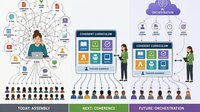
The real debate is not screens versus no screens. The real debate is whether schools will remain age-batched, whole-group, grade-level systems while pretending every student is cognitively ready for the same lesson — or whether they will move toward mastery-based, personalized learning where technology helps teachers finally meet students where they are.
The over-reach of anti-screens is going to affect millions of students without any discernment. I’m going to need to step up my get-famous PR game and write yet another book to counter the errors beyond my recent After AI: What Human Intelligence Actually Is.
In recent years, a vocal backlash against screens and educational technology (edtech) in classrooms has gained momentum. Critics, including neuroscientist Jared Cooney Horvath (The Digital Delusion), psychologist Jonathan Haidt (The Anxious Generation), and parent advocacy groups like Schools Beyond Screens, argue that devices such as Chromebooks and iPads distract students, foster addiction-like behaviors, hinder deep learning, and contribute to stagnant or declining test scores. They point to correlations with international assessments like PISA, personal stories of children zoning out on YouTube or games during class, and calls for device limits, opt-outs, or bans—especially in early grades.
They are becoming source points for a national drama that treats all screen-based learning as suspect, even when the real issue is not the screen but design, purpose, supervision, and implementation.
Their rhetoric resonates with many frustrated parents who feel schools undermine home screen-time rules and prioritize corporate edtech over human teaching. Yet a closer examination reveals oversimplifications, selective causation, and practical realities that complicate the narrative. The push against screens often sidesteps deeper structural issues in education while overstating technology’s harms relative to its potential.
The Origins: Data, Anecdotes, and Amplification
The current wave draws from post-pandemic disillusionment after rapid device rollout, combined with longstanding skepticism about tech-driven education reforms. Horvath’s work emphasizes neuroscience claims about attention, shallow processing on screens, and meta-analyses suggesting limited or negative impacts from general edtech. Haidt extends broader concerns about youth mental health and attention economies to school contexts. Parent groups amplify these with testimonials of distraction and lost social interaction, pressuring districts for policy changes like those in Los Angeles Unified.
Social media, op-eds, and books have turned these views into a movement. However, much of it rests on correlations without fully grappling with confounding factors like policy frameworks, implementation quality, or pre-existing trends. Discussions in communities like r/ChildPsychology highlight skepticism toward Horvath specifically. Commenters note his shift toward psychology without formal training in the field, limited recent peer-reviewed publications directly tied to edtech, self-published elements of his work, and potential for overstated or selectively interpreted claims. Critics describe him as marketing heavily and question whether his compilations meet rigorous standards, viewing some output as more pop-science than groundbreaking empirical research.
Counterpoint 1: No Child Left Behind and the Limits of Age-Based Progression
A major irony in anti-edtech arguments is their failure to address how federal policies like No Child Left Behind (NCLB) shaped the very classroom dynamics they criticize. NCLB’s noble intent—to ensure underserved students had access to grade-level content and that no child was “left behind”—emphasized standardized proficiency targets, age-based grade placement, and high-stakes testing. In practice, this often advanced students chronologically before they mastered prerequisites, widening gaps as deficits accumulated.
NCLB did not invent age-based schooling, but it hardened the system around grade-level standards, annual testing, and proficiency targets. That made “access to grade-level material” the compliance goal even when many students lacked prerequisite knowledge. The result was a structural contradiction: schools were expected to deliver grade-level instruction to age-grouped classrooms while simultaneously remediating years of unfinished learning.
Teachers in mixed-ability classrooms must simultaneously address students far behind while teaching to the middle or ahead, stretching limited instructional time. This structural pressure makes personalization essential. Edtech and adaptive screens can help by allowing students to build foundations at their own pace—something pencil-and-paper uniformity struggles to achieve at scale. Opponents of screens who ignore this should logically advocate repealing or fundamentally reforming NCLB-style policies in favor of true competency-based progression. Without such systemic change, removing tools that support differentiated instruction risks leaving more children behind under the guise of protecting them.
Counterpoint 2: Pencil-and-Paper vs. Screens—What’s the Real Difference?
Critics romanticize “analog” methods (paper, pencils, teacher-led instruction) as inherently superior for focus, retention, and social learning. Yet screens offer capabilities traditional tools lack: real-time adaptive learning that adjusts difficulty to a student’s mastery level, AI-driven personalization accounting for interests, cultural background, and learning style, instant feedback, multimedia explanations for complex concepts, and data insights for teachers.
The question for people advocating return-to-analog aren’t doing the math: how is a teacher supposed to pay enough attention in a 45-minute block to every single student, especially when 30–40% are a grade level—or many grade levels—behind? Those ones can’t get the grade-level material without intervention, each one of 7-10 out of 30. How many minutes for each one who literally can’t do the normed-level grade work? Every. Single. Day. That’s the reality.
Well-designed digital environments can enhance comprehension and engagement when used purposefully. The real distinction is not screens vs. no screens, but passive consumption versus active, guided use. Blanket opposition overlooks how screens can democratize access to high-quality, tailored instruction—especially in under-resourced settings—while hybrid models leverage the best of both.
Counterpoint 3: Selective Outrage on Screen Time
Many vocal parents and thought leaders decry school screens while maintaining or expanding consumer screen use at home (streaming, gaming, social media). This raises questions of consistency. If devices are so addictive and harmful, why focus primarily on blaming schools rather than comprehensive family and societal limits? Schools become convenient scapegoats for broader cultural shifts in attention economies. True solutions require accountability across environments, not just restricting edtech while consumer tech thrives.
The argument parents make that does resonate is the lack of enough direct human teaching. That is true. It’s also inescapable when your child is many grades behind, or even grades ahead, gifted and bored so allowed a different set of digital tools.
It’s simple-minded to think that all kids today in the massively mixed-ability of our culturally-shifted age are all nominally at the same point.
The challenge of providing schooling has been intensified by changing student populations, including students entering U.S. schools with interrupted formal education, limited English proficiency, or literacy gaps in their home language. Teachers are expected to welcome, include, assess, remediate, and accelerate these students while still delivering age-grade standards. That is not a screen problem. That is a structural design problem.
We can do better. We must do better to back up all the educators. Thousands of edtech company leaders get it, and they’re doing it. And they’re being shot at.
Counterpoint 4: Agendas, Correlation, and the Limits of “Neuroscience” and Psychology
What’s really going on? The more drama, the more book sales. Even if this drama ends up having a negative effect and spreading chaos in markets.
Figures like Horvath and Haidt wield credentials in neuroscience and psychology to lend authority. However, these fields face longstanding critiques: they often deliver descriptive statistics and correlations with weaker reproducibility, predictive power, and causal rigor than physics or chemistry. Reddit discussions and broader critiques echo this, questioning heavy reliance on correlational data (e.g., device proliferation alongside score declines) while downplaying confounders like NCLB-era policies, socioeconomic factors, or pandemic effects.
Some reviewers praise Horvath for forcing a needed conversation about indiscriminate edtech adoption, but the policy leap from “some tools are poorly implemented” to “classroom technology broadly harms learning” deserves much more scrutiny.

Here’s a critique of Horvath on Reddit: https://www.reddit.com/r/ChildPsychology/comments/1qxmne4/professionals_and_researchers_what_are_your/
(Talking about Horvath), the three resonant statements in the long post:
- “I don't know about his personal beliefs, but I do think his science is suspect. It seems like he is appealing to a particular segment of public sentiment for personal gain.
- Why would you start trying to change the way children learn based on feeling?
- Approaching education reform primarily through a “big club” of brain science or mental health narratives can sideline structural issues—curriculum design, teacher training, funding, and regulatory incentives favoring quick tech purchases. Agendas emphasizing crisis deserve scrutiny. Education policy should prioritize evidence of what works in context over sweeping tech skepticism.”
Toward Balanced Reform
The anti-screen movement highlights some legitimate concerns: distraction, over-reliance on poorly designed tools, privacy issues, and the tendency of some districts to purchase technology before establishing a clear instructional purpose. Schools should absolutely audit edtech for efficacy, set thoughtful limits, protect teacher agency, and demand evidence that tools improve learning.
However, demonizing screens as a category ignores an essential reality: technology is not a pedagogy. A screen can deliver distraction, or it can deliver personalization, accessibility, translation, assessment, intervention, and feedback. The issue is not the screen itself, but how the tool is designed, implemented, supervised, and aligned to learning goals.
Effective education balances human connection with tools that help scale personalization. Blaming edtech alone distracts from more difficult conversations about school structure, policy, student readiness, staffing realities, and implementation quality. Parents, educators, and policymakers should demand better evidence and smarter integration—not false choices between screens and success.
If you're truly anti-screen, then focus on the structural conditions that made schools dependent on digital tools in the first place. Challenge age-grade compliance that groups students by birth year rather than readiness. Challenge systems that expect teachers to deliver grade-level content to classrooms where students may span multiple years of academic preparation. Challenge policies that prioritize exposure to standards over actual mastery.
Advocate for mastery-based learning in which every learner progresses according to demonstrated understanding rather than seat time or age. Place students at the appropriate instructional level in each subject and allow them to advance as they are ready. Then let technology serve its proper role: providing interactivity, immediate feedback, instant definitions while reading, adaptive practice, translation support, AI-powered tutoring, and individualized pathways that help learners build knowledge independently.
Students have always been expected to read, write, research, solve problems, complete assignments, and listen to instruction. Making those experiences digital does not eliminate learning. When done well, it increases access, improves responsiveness, reduces administrative burden, and supports personalization at a scale impossible with paper alone.
If anti-screen advocates want to remove digital learning tools, they should also be honest about the replacement model. They would need to advocate for mastery-based progression, smaller class sizes, flexible grouping, significantly increased staffing, and a departure from age-based instructional expectations as the dominant design of schooling. Otherwise, they are not solving the underlying problem—they are simply taking away one of the few mechanisms schools currently possess for managing extraordinary instructional variation.
The future should not be screen-saturated schooling. But it cannot be nostalgia dressed up as neuroscience, either. The future should be teacher-led, student-centered, mastery-based learning, with technology used deliberately to personalize, clarify, adapt, translate, define, assess, and ultimately free teachers to do what only teachers can do: observe, diagnose, mentor, guide, inspire, and help each learner overcome obstacles to understanding.
The real question is not whether schools should have screens. The real question is whether schools will continue forcing radically different learners through the same age-batched system, or finally build a model that allows every learner to progress from where they are. That's the debate worth having.
Source Images: